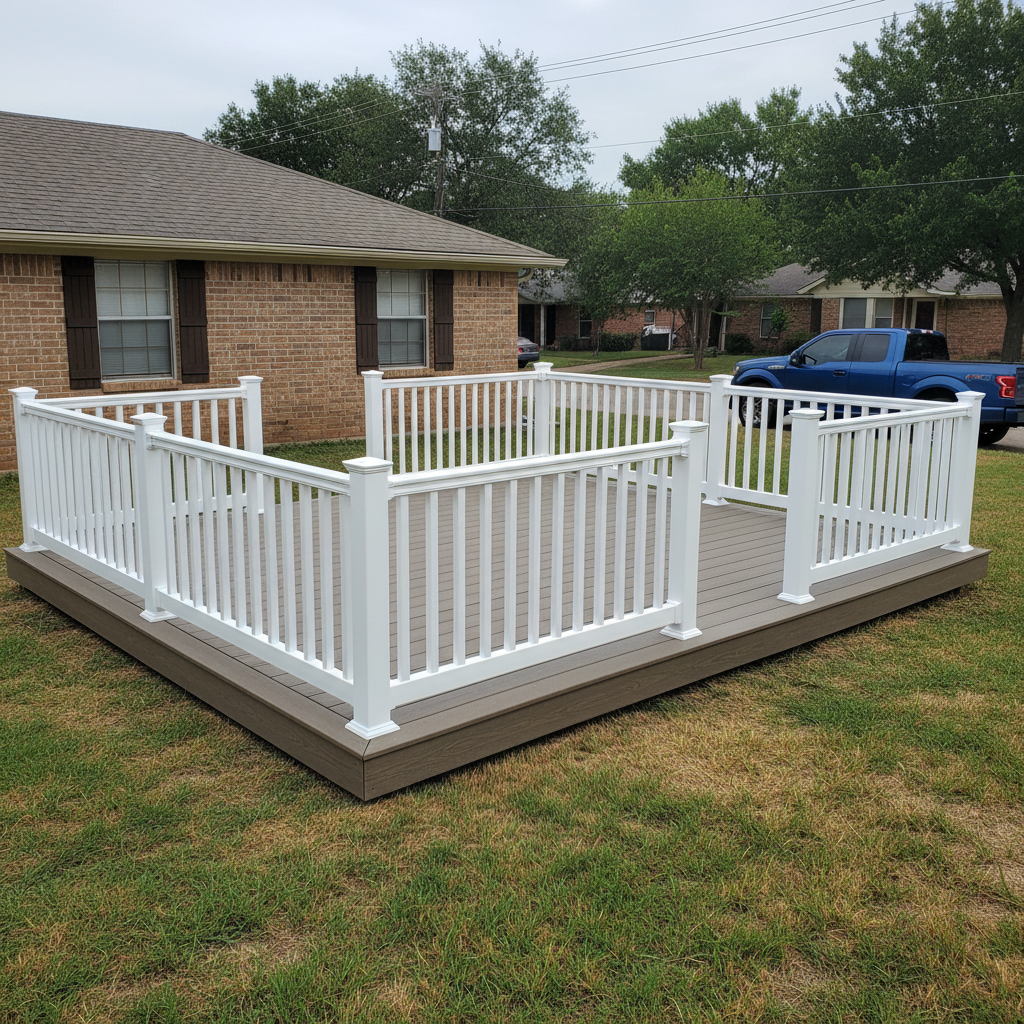
Socorro sits on ground that gives deck builders a specific headache: caliche. It's that pale, cemented layer of calcium carbonate that shows up a foot or two down across most of the Lower Valley, and it does not dig like dirt. A post hole digger bounces off it. A builder who's never hit caliche before will underbid the footing work, then either fight it with a hand tool for an hour per hole or pour a shallow footing that isn't actually resting on stable material. Ask any builder you're talking to how deep they typically go for post footings here and whether they expect to hit caliche. If they look confused, that tells you something.
Start with what's under the deck, not what's on top of it
A deck is only as good as what holds it up. In this area that usually means concrete footings set below the caliche layer, often 18 to 24 inches depending on soil conditions on your specific lot, with the post anchored into the cured concrete rather than just buried in it. The ledger board, the piece that bolts the deck to your house, is the other place decks actually fail. It needs to be lag-bolted or through-bolted into the house's rim joist, not just nailed, and it needs flashing above it. Our summers are dry, but the monsoon season from July through September can dump an inch of rain in forty minutes, and water that gets behind an unflashed ledger will rot the band joist of your house even in a desert climate. Ask specifically how they're attaching the ledger. If the answer is vague, keep asking.
Permits aren't optional, and skipping them costs you later
Socorro requires a building permit for most deck construction, and inspections typically happen at two points: after the footings are dug and before they're poured, and again once the structure is framed but before decking boards go down. A builder who tells you permits aren't necessary for a deck, or who offers to "keep it off the books" to save time, is setting you up to pay for it when you sell the house. Unpermitted structural work is a common finding in home inspections around here, and it can hold up a sale or force you to tear out work that's already built. If your property is in a subdivision with an HOA, which is common in the newer developments around Socorro and Horizon City, check your covenants before design even starts. Some HOAs restrict deck height, railing style, or how close you can build to a property line.
Licensing and insurance, and what to actually ask for
Texas doesn't require a statewide license for general residential contractors, which means the burden is on you to vet who you're hiring. Ask for proof of liability insurance and ask them to name their insurer, not just say "yes we're insured." Ask if their crew carries workers' comp. If a worker falls off a ledger board eight feet up and breaks a wrist on your property, you want that covered by their policy, not argued over with yours. A legitimate builder will hand over a certificate of insurance without hesitation. One who stalls or changes the subject is telling you something.
Get a written contract before any work starts. It should list the footing depth, the lumber species or composite brand and board width, the fastener type, railing height, and a payment schedule tied to completed stages rather than a single upfront lump sum. A deposit of 10 to 30 percent to cover materials is normal. Being asked for the full amount before a single hole is dug is not.
Material choices that actually matter in this climate
El Paso County sun is intense almost year round, and the high desert elevation means UV exposure is harsher than it looks on a weather app. Pressure-treated pine is the cheapest decking option, but it needs staining or sealing within the first year and then roughly every two to three years after that, or it checks and splits under the heat. Composite boards cost more upfront but handle the UV better and don't need staining, though they still expand and contract with our daily temperature swings, which can run 30 to 40 degrees between a July afternoon and a July night. That means proper gapping between boards at install matters more here than in a milder climate. A builder who doesn't mention thermal gap spacing when quoting composite isn't thinking it through.
Railings have a code requirement worth knowing regardless of who builds it: 36 inches minimum height for most residential decks, balusters spaced so a 4-inch sphere can't pass between them. If you're set on cable rail or a modern horizontal style, make sure your builder knows the spacing rules apply to those too, since horizontal cable runs often need to be tighter than people expect to pass inspection.
What the neighborhood you live in changes
Older homes closer to the Mission Trail and the original Socorro townsite often have additions and slab work done over the decades without much documentation, which means a builder tying a new deck into that structure needs to actually inspect the rim joist and foundation condition before quoting, not just measure and go. Newer subdivisions built from the 1990s on tend to have more predictable framing and setback requirements, but tighter HOA rules and sometimes less yard to work with once you account for property line setbacks. Either way, a builder who shows up, walks the yard, checks the house framing where the ledger will attach, and asks about your soil before giving you a number is doing it right. One who quotes a price over the phone without seeing the property isn't able to account for any of this, and that number will move once they actually start digging.
Red flags worth walking away from
- No mention of a permit, or a suggestion to skip one
- A quote given without a site visit
- Full payment requested upfront
- No written contract, or one that doesn't name the materials and footing depth
- Can't produce insurance information when asked directly
- No answer when you ask how they're attaching the ledger board
None of this is complicated, but it's easy to skip when you're comparing a few quotes and the lowest one looks appealing. A deck that's under-built doesn't fail on day one. It fails in year four or five, usually after a few monsoon seasons and a couple hundred freeze-thaw nights have worked on a ledger connection or a shallow footing. Asking the right questions up front costs you nothing and tells you a lot about who you're hiring. If you want someone to walk your yard and give you a straight answer on what your lot actually needs, that's the conversation we're glad to have at Platinum Deck Solutions.